People who suffer from rosacea and experience flushing and redness.
People with early aging changes and sun damage.
People who don't want the downtime of laser resurfacing.
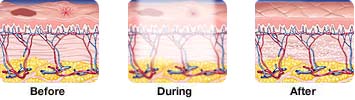
ISkin Treatments often consist of full-face or body treatments, using gentle energy parameters. The treatment regime typically consists of:
You can expect to see a gradual decrease in overall redness, flushing and dilated capillaries. Sun damaged skin will become smoother with a decrease in fine wrinkles, reduction in pore size, and fading of sun spots. Many people with rosacea see an improvement in breakouts and are able to decrease or discontinue their medications.
After your first Fotofaical treatment, your skin will feel smoother and will have a more even tone. These improvements are gradual and will be more visible after each treatment. Five treatments are performed for optimal results. some patients benefit from additional treatments.
Dr. Bitter (a dermatologist in California) first published this technique and has been doing it since 1998. Dr. Mulholland (a plastic surgeon in Toronto) also helped refine the procedure especially with regards to wrinkle improvement. Dr. Speron has been performing this procedure since July 2000 and has taken extensive additional training courses by Drs. Bitter and Mulholland (as have the nurses performing this procedure in our office).
There are many skin rejuvenation devices on the market today for treating areas other than just the face. The neck, chest, back and extremities may also be treated. Please consult with your physician regarding your specific requirements.
Nearly every patient type. Leading physicians worldwide report excellent results on patients of virtually all skin colors, most complexion types and nearly any age.
Patients experience minimal discomfort. We routinely give patients LMX (a topical anesthetic) so that they may be comfortable during the procedure. Some patients do not need it.
Each case varies. When only small areas are treated, the procedure time is short. Typically the procedure may last up to an hour.
Side effects vary individually, but they are typically minimal. The risk of burns from the laser are < 1%.
Following treatment, there should be only minimal restrictions on your activities. Most patients return to work or social activities right away. You can start exercising the next day. Make up can be worn immediately.
Rosacea treatment is based on the infectious disease theory and involves the use of topical and oral antibiotics. Topical antibiotics (metronidazole (Flagyl) and sulfacetamide gels, lotions and creams, are the mainstay of therapy as they reduce the bacterial population of the skin. Oral antibiotics in the tetracycline class (doxycycline, tetracycline, minocycline) or Erythromycin antibiotics are used in more advanced cases. The side effects of Rosacea such as rhinophyma (large bulbous nose) can be successfully treated with surgical shaving or laser surgery, whereas the ophthalmologic complications need specialized care with an ophthalmologist (dry eye, conjunctivitis, red eye syndrome). What about common skin creams that “fight redness,” or treat Rosacea? There is much anecdotal evidence in the patient community that certain products help the redness and flushing of early Rosacea, but really only topical and oral antibiotics and abstinence from the “trigger factors,” are effective for treatment in advanced cases. I personally believe that some of our skin care products are very helpful early in the course of Rosacea. While skin care products can help control or lessen some symptoms of rosacea, the best long-term treatment by far is non ablative no down-time laser treatments (Fotofacial).


"My skin feels awesome! I can't believe there was no down time!"

"I can't believe the things they do nowadays. I should've done this sooner!

When I first published The 7 Critical Questions to Ask Before Letting Any Surgeon Touch You, I had no idea that it would be so popularly received. Since its publication, this brief guide has helped thousands like you to more safely navigate the world of cosmetic surgery. The 7 Questions have been updated and a bonus section, Applying the 7 Questions, has just been added. Be my guest to read, learn and share.